
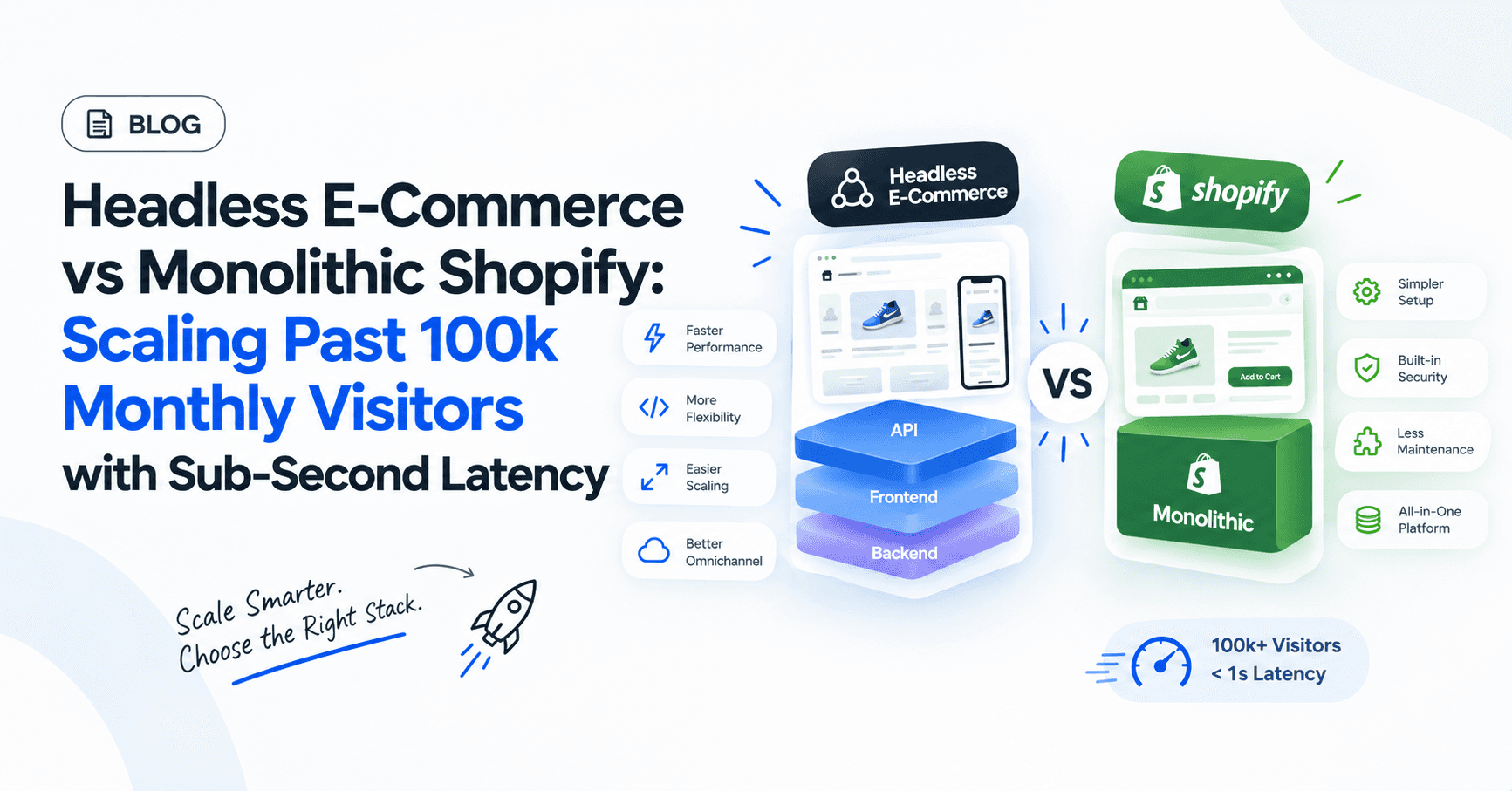
Standard Shopify Liquid themes are fantastic for launching a brand from $0 to $10,000 in monthly sales. But as an e-commerce brand installs dozens of third-party apps for reviews, upsells, popups, and analytics, the storefront degrades into a sluggish, bloated maze of third-party script tags.
1. Hitting the Monolithic Theme Wall
Every additional Shopify app injects tracking scripts, custom fonts, and synchronous tracking pixels directly into the document head. The result is page load times exceeding 4 to 6 seconds on 4G mobile devices—costing brands up to 20% of their ad spend in abandoned clicks before the product image even appears.
2. The Decoupled Architecture Blueprint
Headless e-commerce decouples the customer-facing frontend from the backend commerce engine. Shopify still handles product catalogs, payment gateways, PCI compliance, and inventory management via its high-speed Storefront GraphQL API. However, the frontend is built entirely in Next.js and deployed to global edge CDNs.
Headless storefronts routinely clock page transitions in under 200 milliseconds, serving pre-cached product detail pages with instant client-side transitions.
3. Why Speed Equals Direct Revenue
Data from Google and Deloitte shows that every 100ms improvement in e-commerce site speed lifts retail conversion rates by 8.4%. When product catalog pages load instantly, bounce rates drop, average order value (AOV) climbs, and Google rewards the domain with premier organic search placement.
4. Is Headless Right for Your Brand?
If your brand generates over $250k in annual revenue or relies heavily on paid acquisition traffic where fractions of a second impact ROAS, migrating to a headless Next.js architecture is one of the highest-leverage technological investments you can make.
Related Technical Blueprints
We complete your
creative ideas.
Whether you need a flagship website, a modern SaaS web app, or an end-to-end brand redesign, our team is ready to build it.