
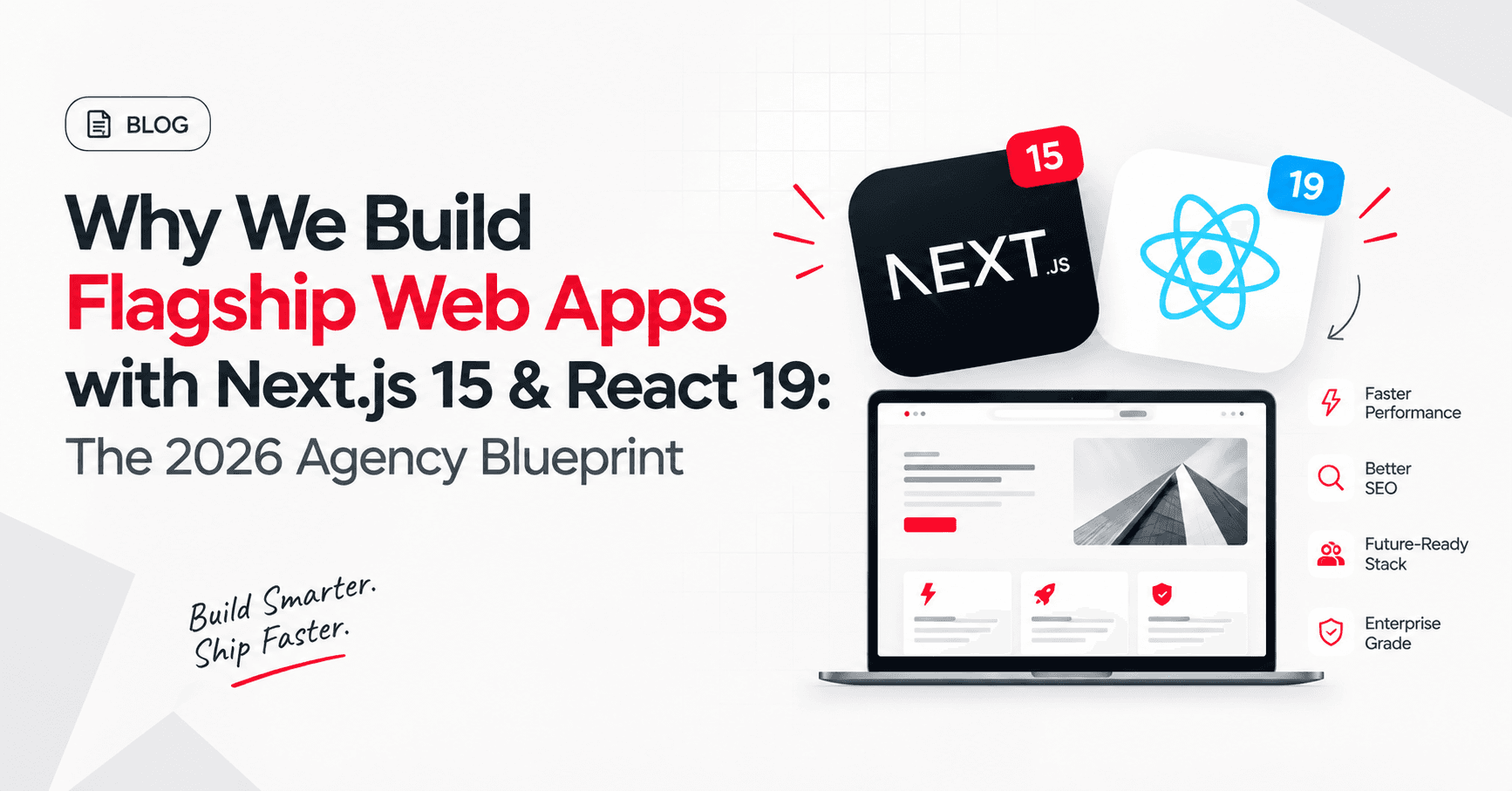
For over half a decade, the standard frontend engineering playbook was simple: download a 2MB JavaScript bundle onto the client, show a loading spinner, and hydrate the entire DOM tree in the browser. In 2026, that architecture is no longer just dated—it directly harms search rankings, conversion rates, and mobile user retention.
1. The Death of Client-Side Bloat
When building flagship platforms at CodeMint Solutions, our benchmark is sub-second First Contentful Paint (FCP) and a zero Cumulative Layout Shift (CLS) score. React 19 and Next.js 15 achieve this by executing heavy computation, database connections, and templating on edge runtimes before shipping a single byte of HTML.
By shifting UI rendering to React Server Components (RSC), dependencies like Markdown parsers, date formatters, and encryption packages stay strictly on the server, shedding up to 60% of the client JavaScript bundle.
2. Partial Prerendering (PPR) & Real-World TTFB
One of the most consequential advancements in Next.js 15 is Partial Prerendering (PPR). Historically, developers had to choose between purely static sites (SSG) or purely dynamic server-rendered sites (SSR). PPR merges both models seamlessly: the static shell (headers, hero copy, navbars) streams instantly from CDN caches, while dynamic personalized widgets stream into Suspense boundaries in parallel.
- Instant TTFB: Static layout renders in under 50ms across global edge nodes.
- Parallel Streaming: Heavy database-backed queries resolve concurrently without blocking initial paint.
- Seamless Hydration: Interactive components hydrate independently without freezing the main thread.
3. React 19 Actions: Zero-Boilerplate Mutations
Forms and data mutations have historically required sprawling boilerplate—Redux stores, Axios handlers, state machines for loading flags, and manual revalidation. React 19 native Actions paired with useActionState make fullstack workflows declarative, secure, and resilient even when network connections drop.
“Next.js 15 isn't just an incremental framework release; it represents a generational leap toward zero-client-overhead web computing.”
4. The Direct SEO Impact on Core Web Vitals
Search engines prioritize websites that feel instant. Google's Interaction to Next Paint (INP) metric directly penalizes bloated main threads that lag during user inputs. By keeping client execution minimal and rendering semantic HTML server-side, Next.js 15 applications naturally score 95+ on Google Lighthouse benchmarks out of the box.
5. The CodeMint Verdict
Whether we are engineering high-traffic e-commerce storefronts or enterprise SaaS portals, Next.js 15 and React 19 provide the structural foundation for lightning speed, effortless developer velocity, and measurable organic search dominance.
Related Technical Blueprints
We complete your
creative ideas.
Whether you need a flagship website, a modern SaaS web app, or an end-to-end brand redesign, our team is ready to build it.